Spinning spider machine
Can live spiders be used to fabricate a shading system? Spider webs become a building-integrated shading element, housed in prefabricated box-window double-skin facades that lower the building's energy consumption and glare. In 2008 NASA found that spiders in zero gravity spin webs of symmetrical, even thickness. I could not get to orbit, so I mounted them on a spinning disco-ball motor instead.
"Weaving the Double Skin III" · with Christopher Horng (B.Arch 2023)
- Project
- Spinning Spider Machine
- Location
- Ankara, Turkey
- Year
- Fall 2021
- Studio
- Prof. Ahu Aydogan
- Role
- Rig design, experiment design
The question
A shading device is normally specified, manufactured, and installed. This studio asked what happens if it is grown instead: if the element that filters light into a building is made by an animal, on site, continuously, and has to be kept alive to keep working.
We built everything together over the semester. I designed the rig and made most of the decisions about how the experiment was structured; Christopher Horng produced most of the visual material.
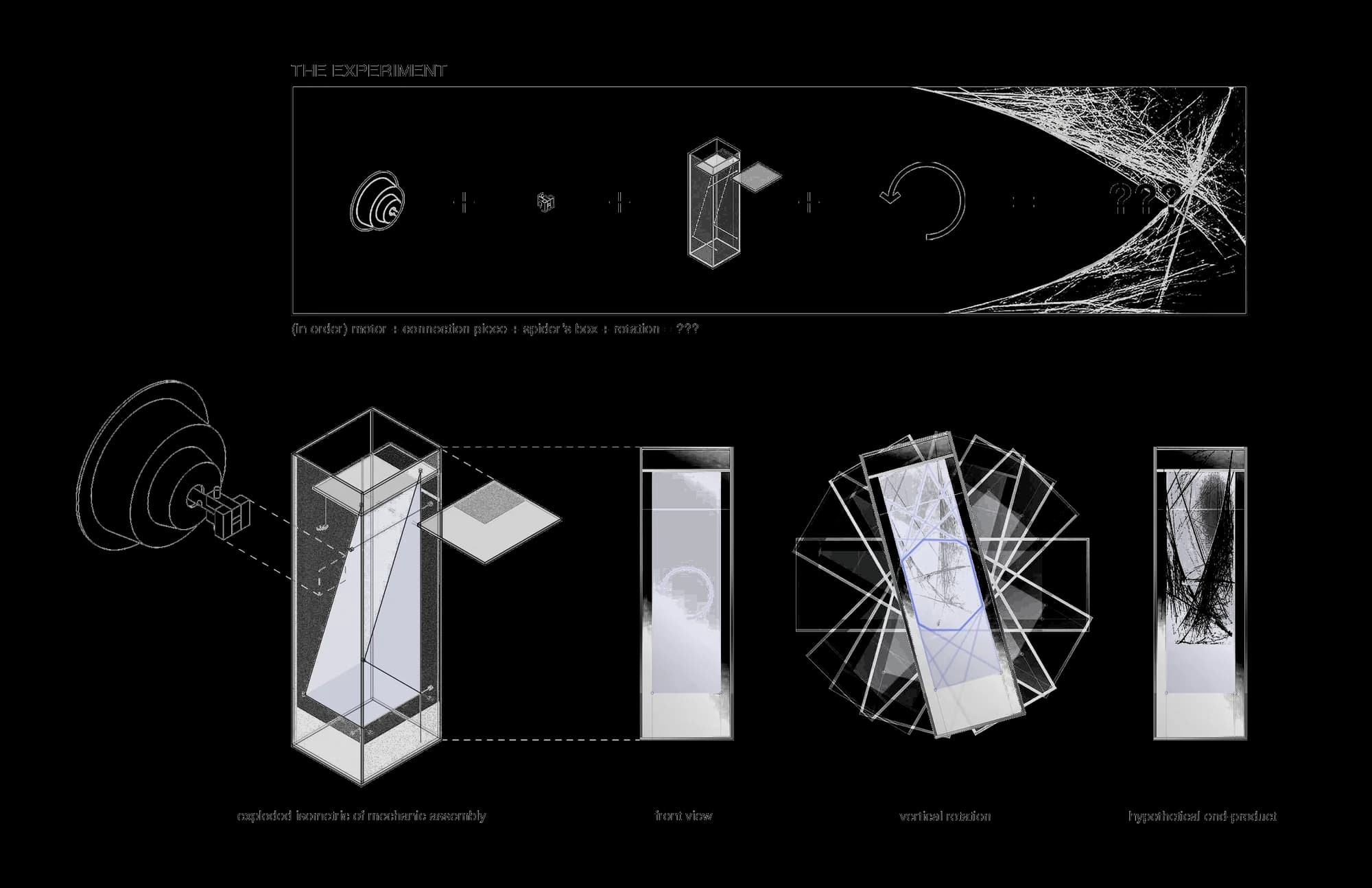
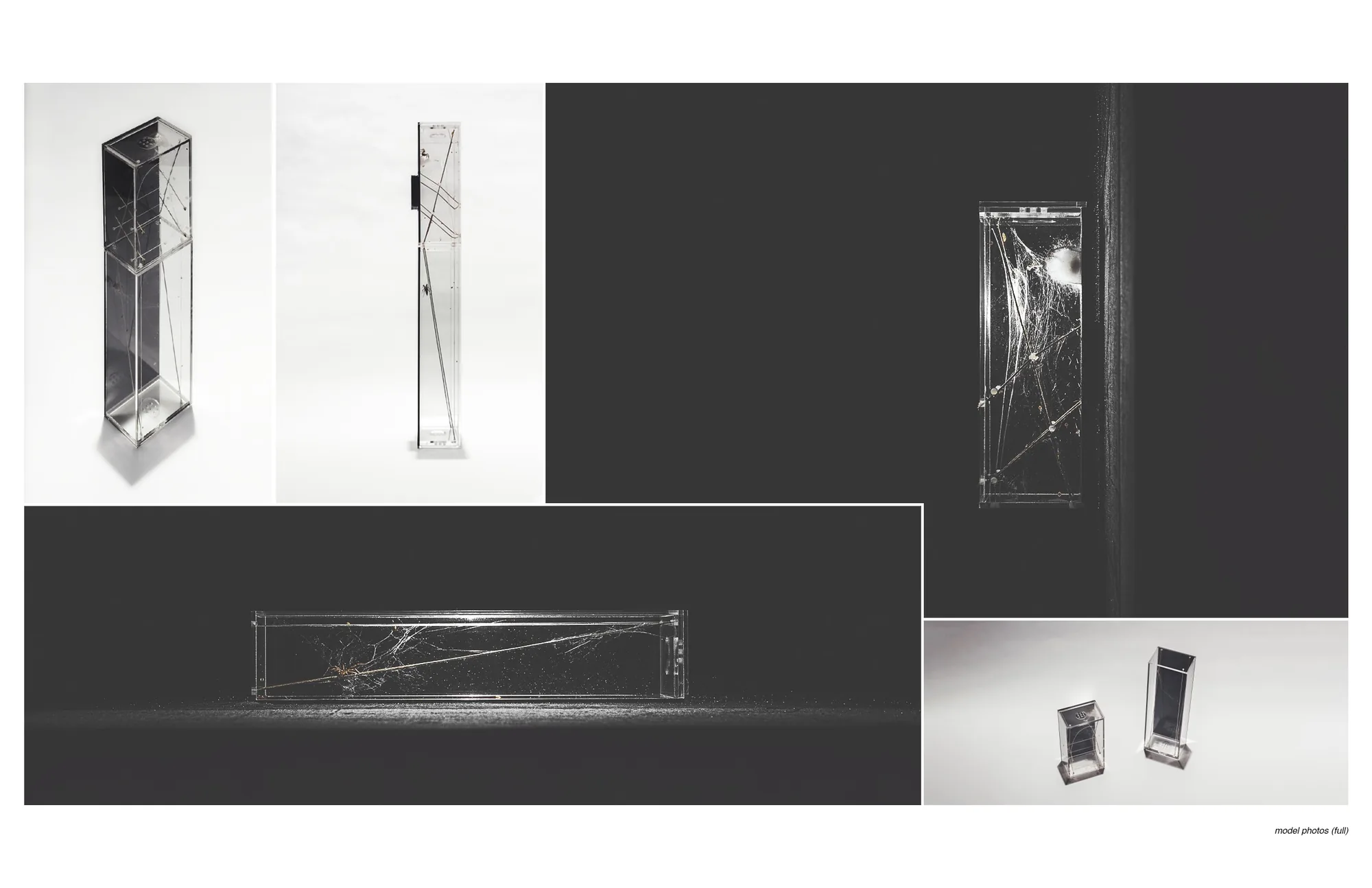
The experiment — motor + connection + spider's box + rotation
The apparatus is a habitat box mounted to a continuously rotating motor, so the spider never settles into a stable orientation and cannot resolve a normal orb. Rotation is the variable standing in for zero gravity: it does not remove the gravitational vector, it keeps moving it.
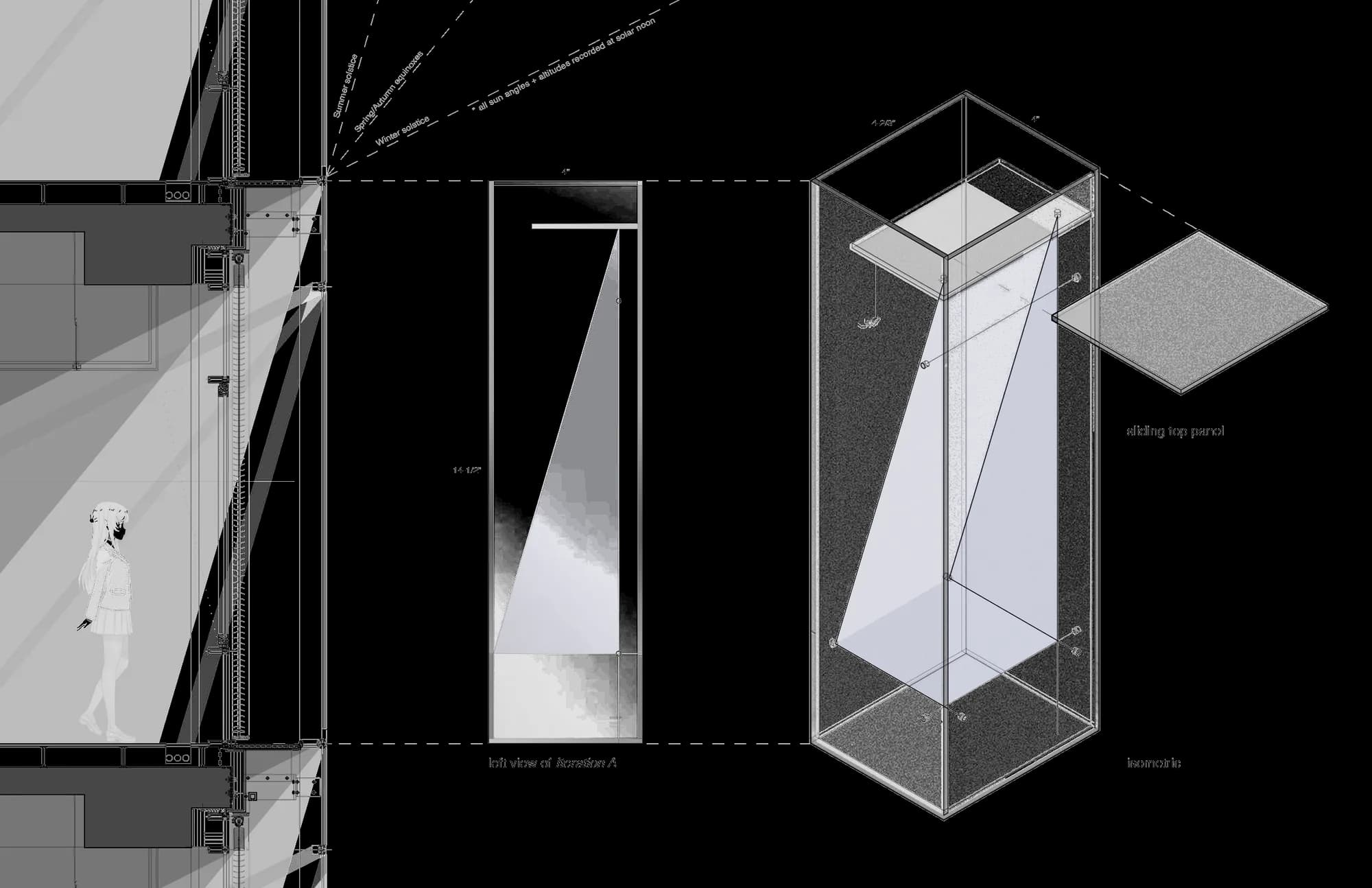
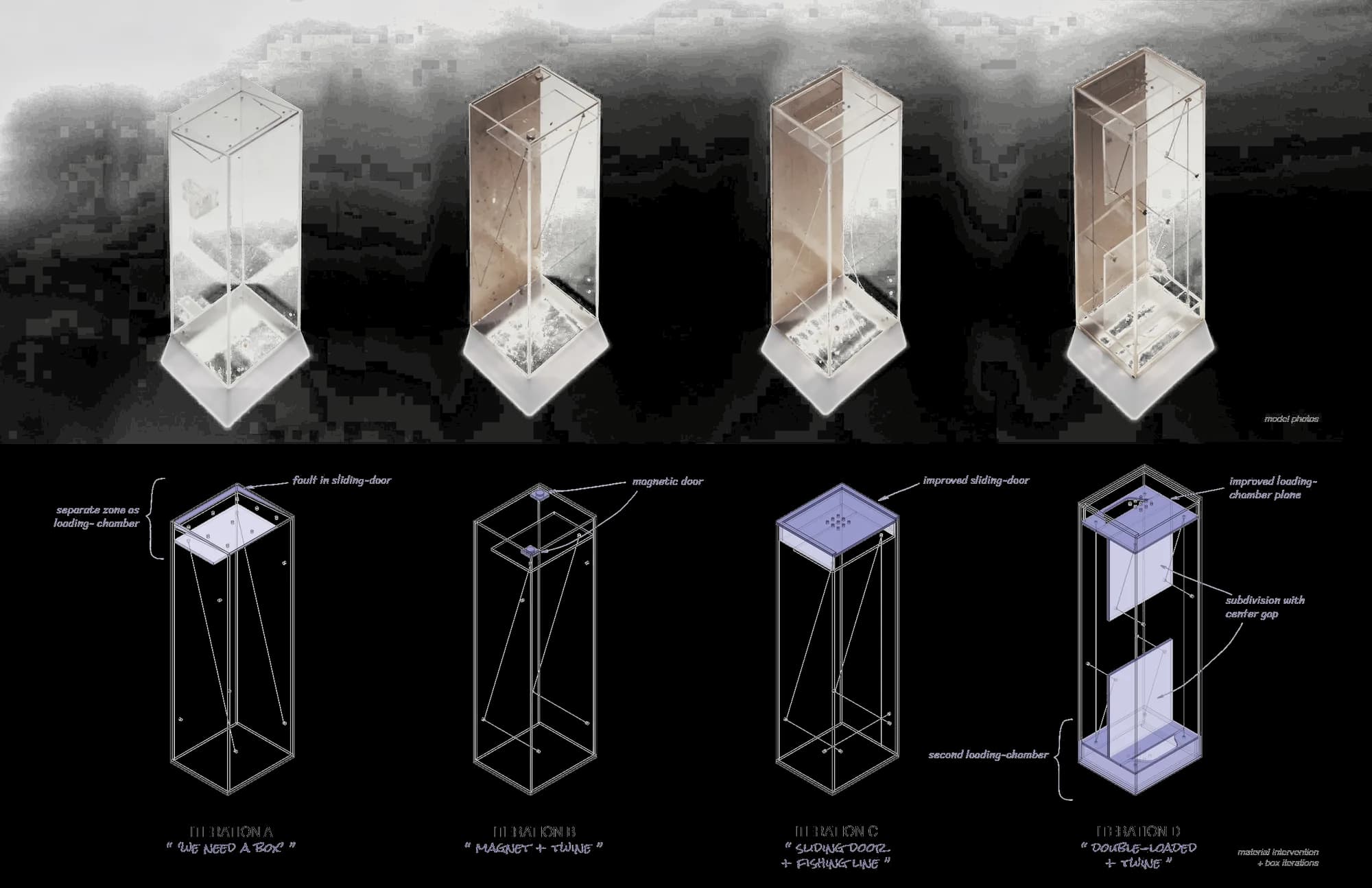
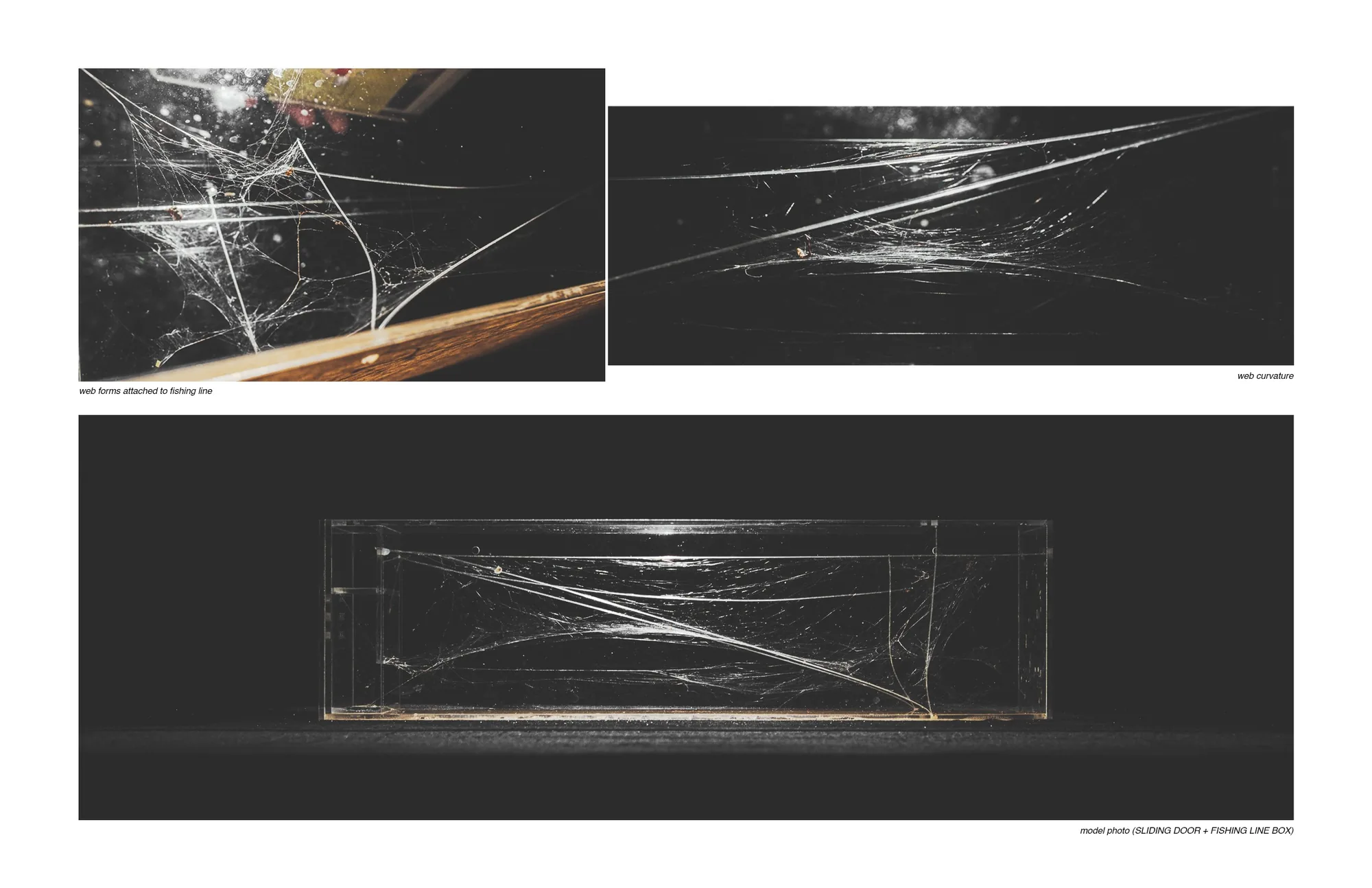
Box iterations — every variable changed where the spider chose to spin
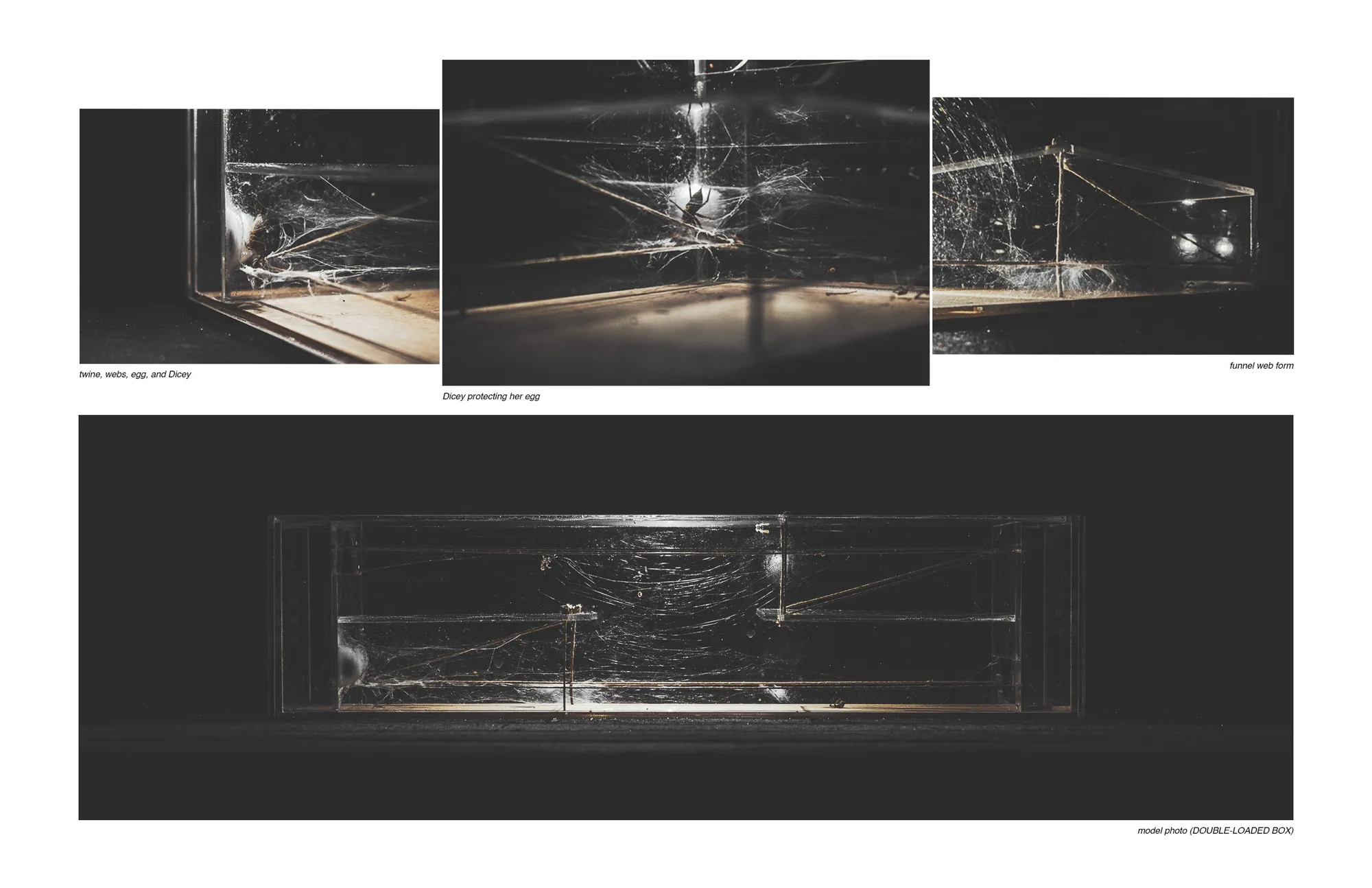
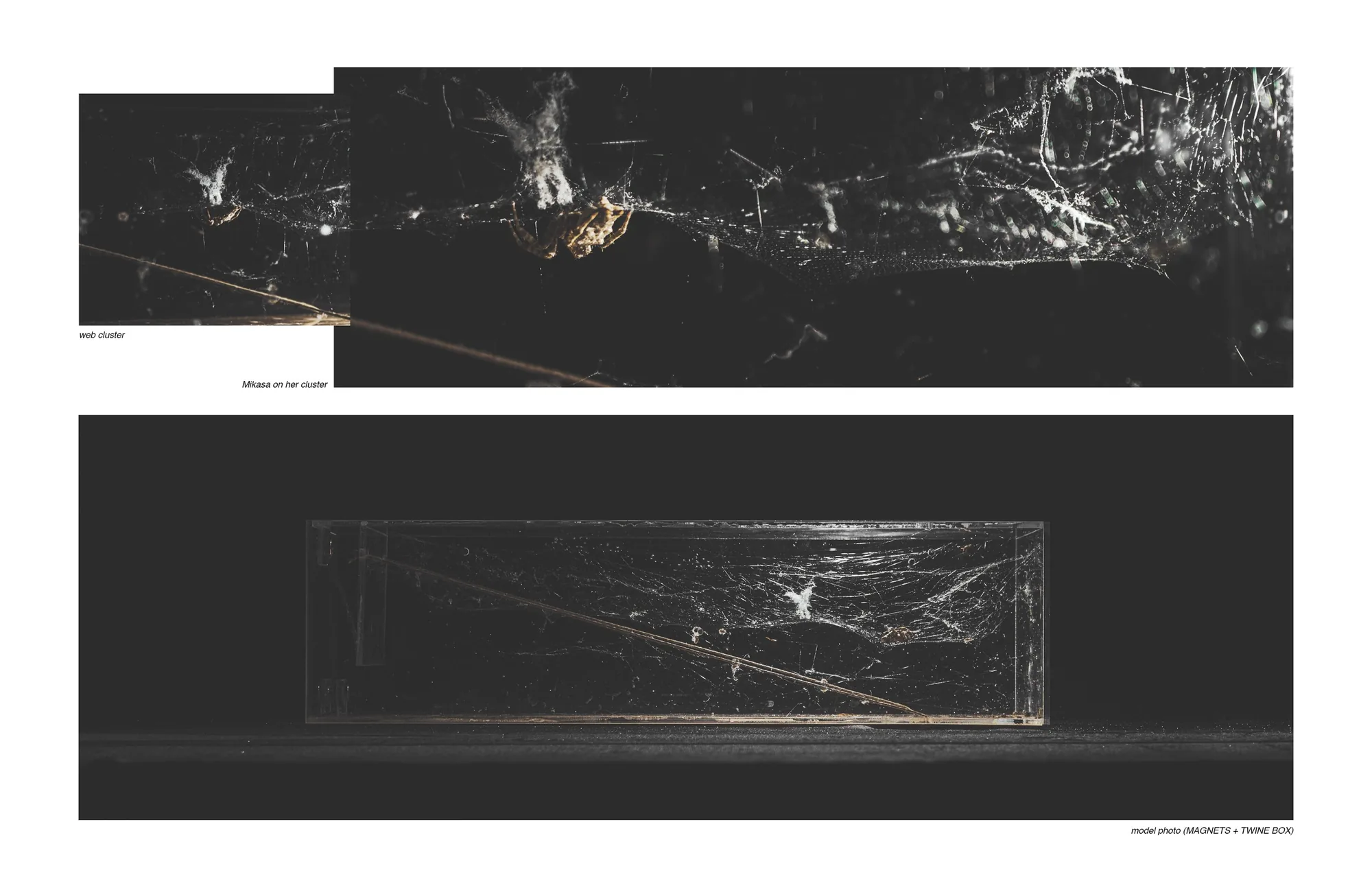
Five habitat iterations, each changing one thing about how the spider entered, anchored, and was retrieved: loading from the side against loading from the bottom, magnets and twine against a sliding door and fishing line, a single volume against a double-loaded pair. Every change moved where the spider chose to spin, which is the actual finding. The geometry of the enclosure is the design instrument, not the motor speed.
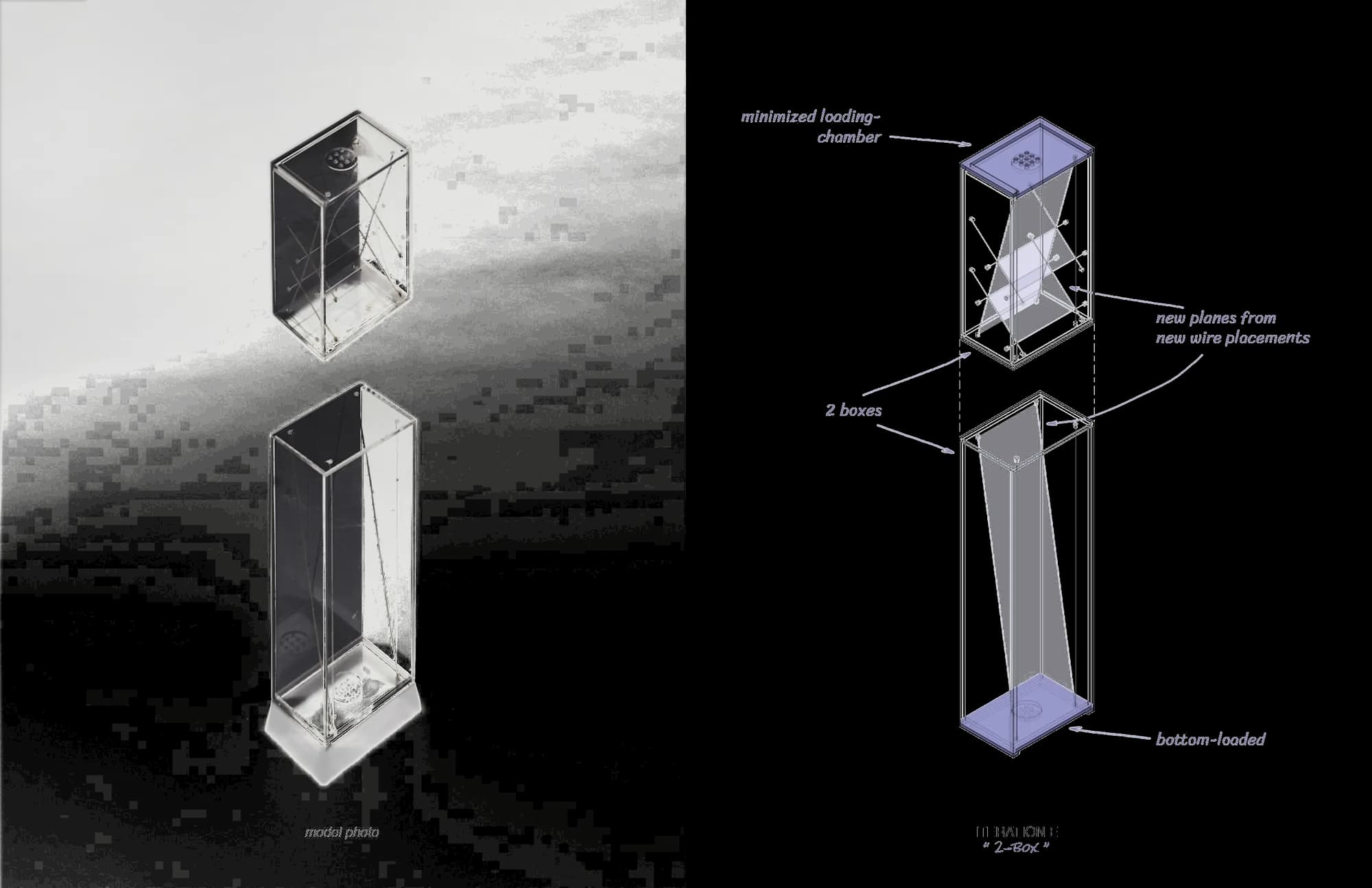
What the spiders built
The webs came out curated rather than random: funnel forms in the double-loaded box, dense clusters against the magnet-and-twine anchors, sheets stretched along the fishing line wherever we gave them a line to follow. The spiders were named and tracked individually, and one of them, Dicey, spent most of the study protecting an egg sac instead of spinning, which is its own result about relying on a living fabricator.
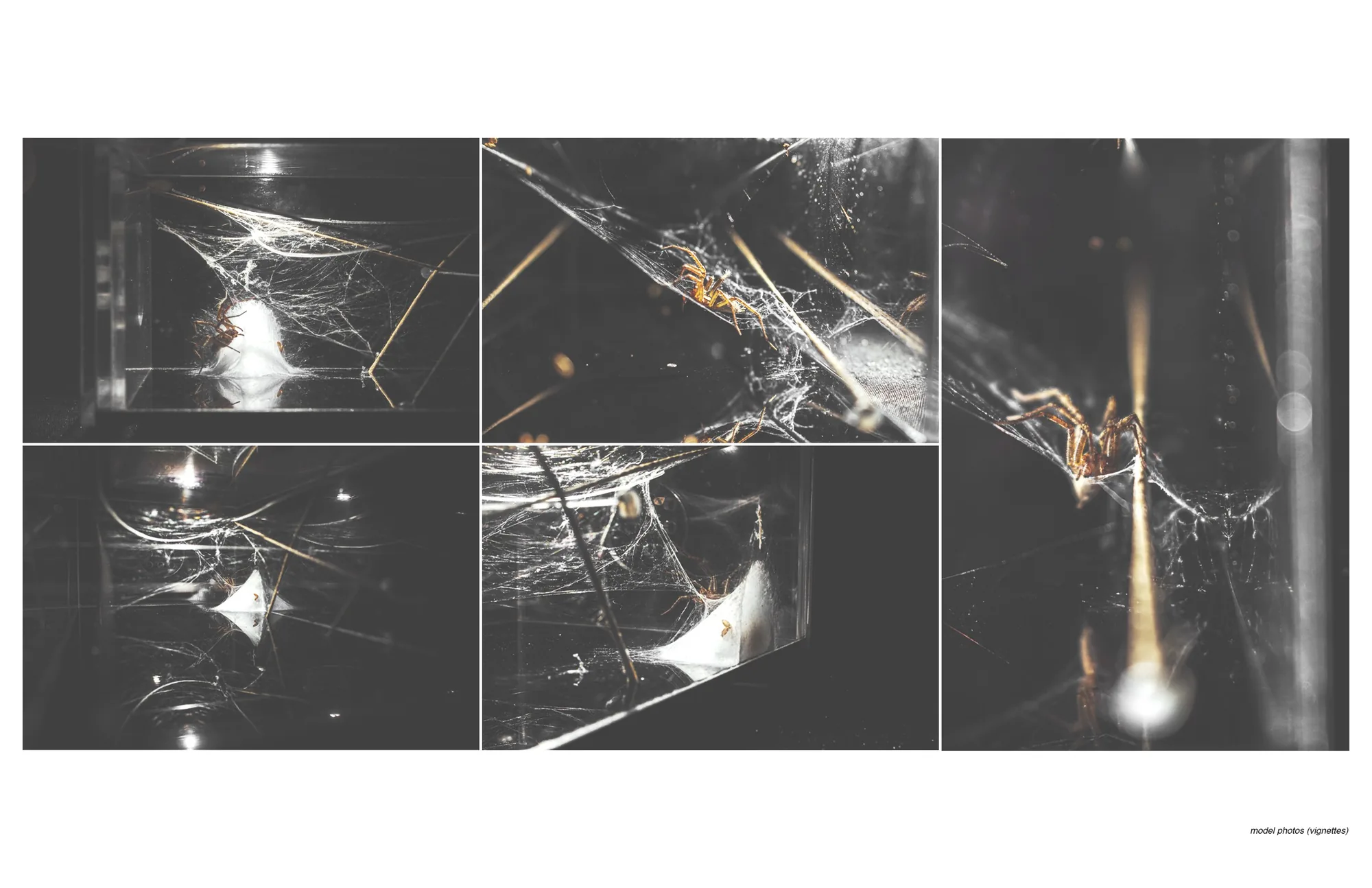
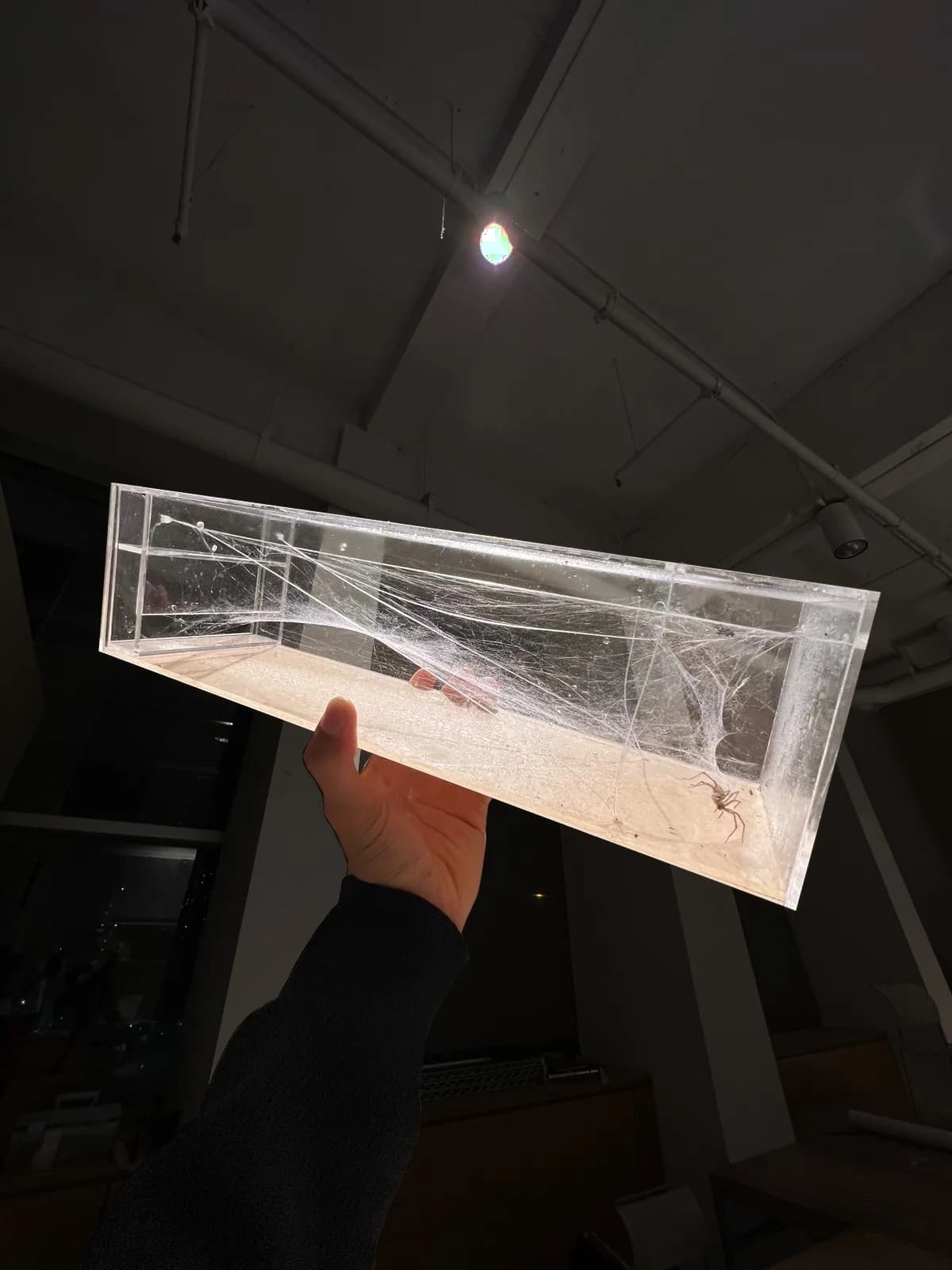
Conceptual
Scaled up as a pavilion study before the facade application, to see whether a web reads as an architectural surface at all once it is more than a specimen.
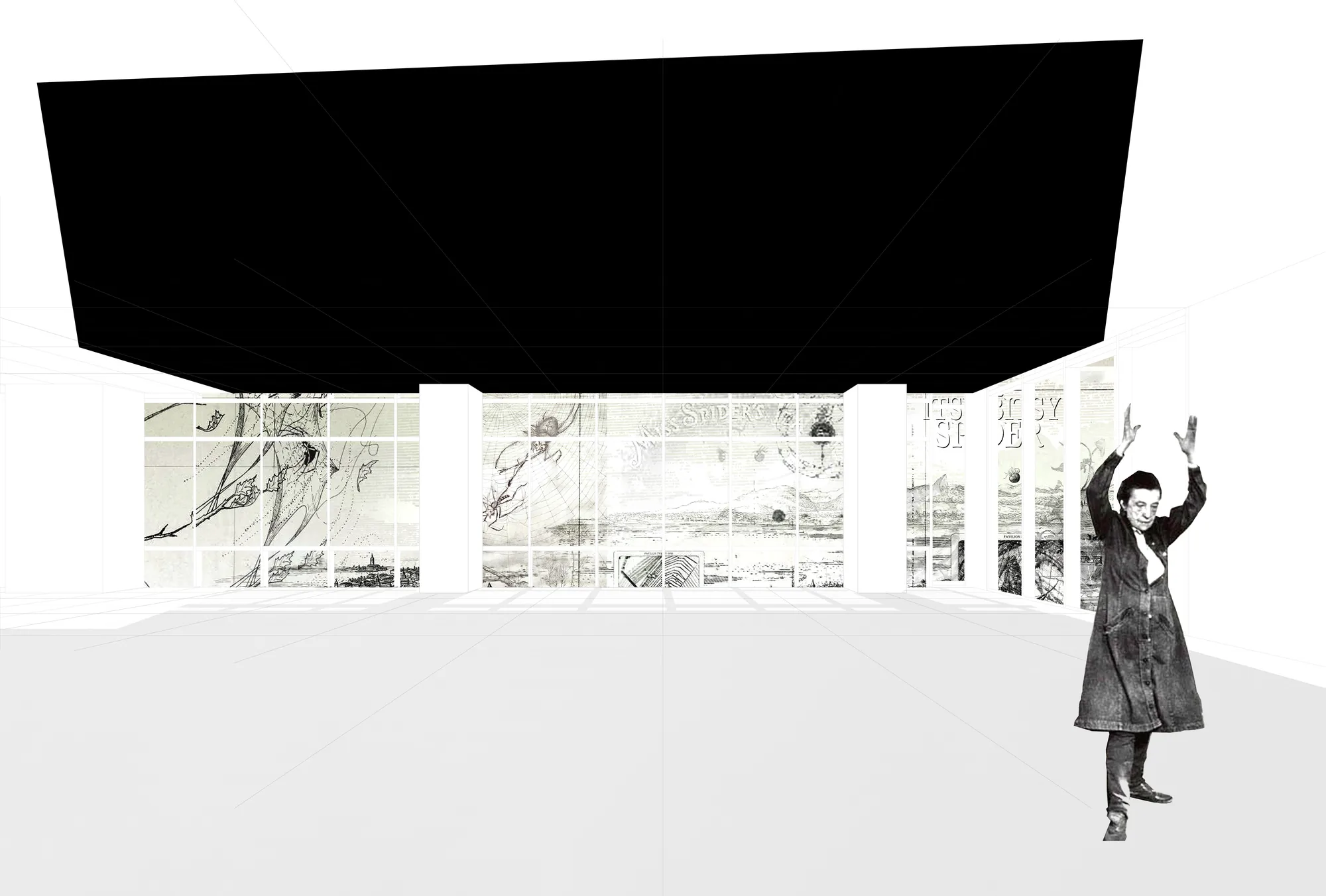
Web as shading element
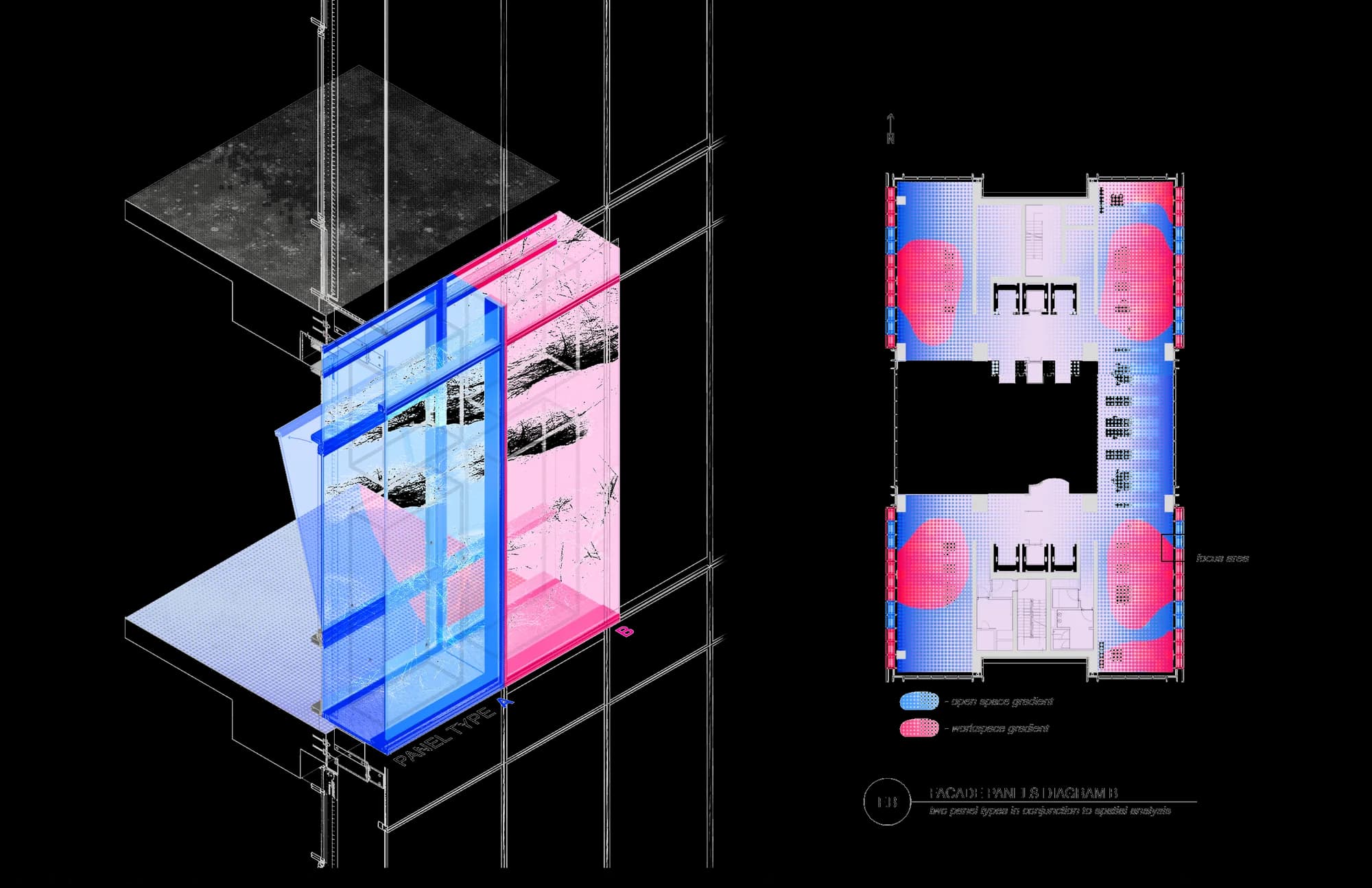
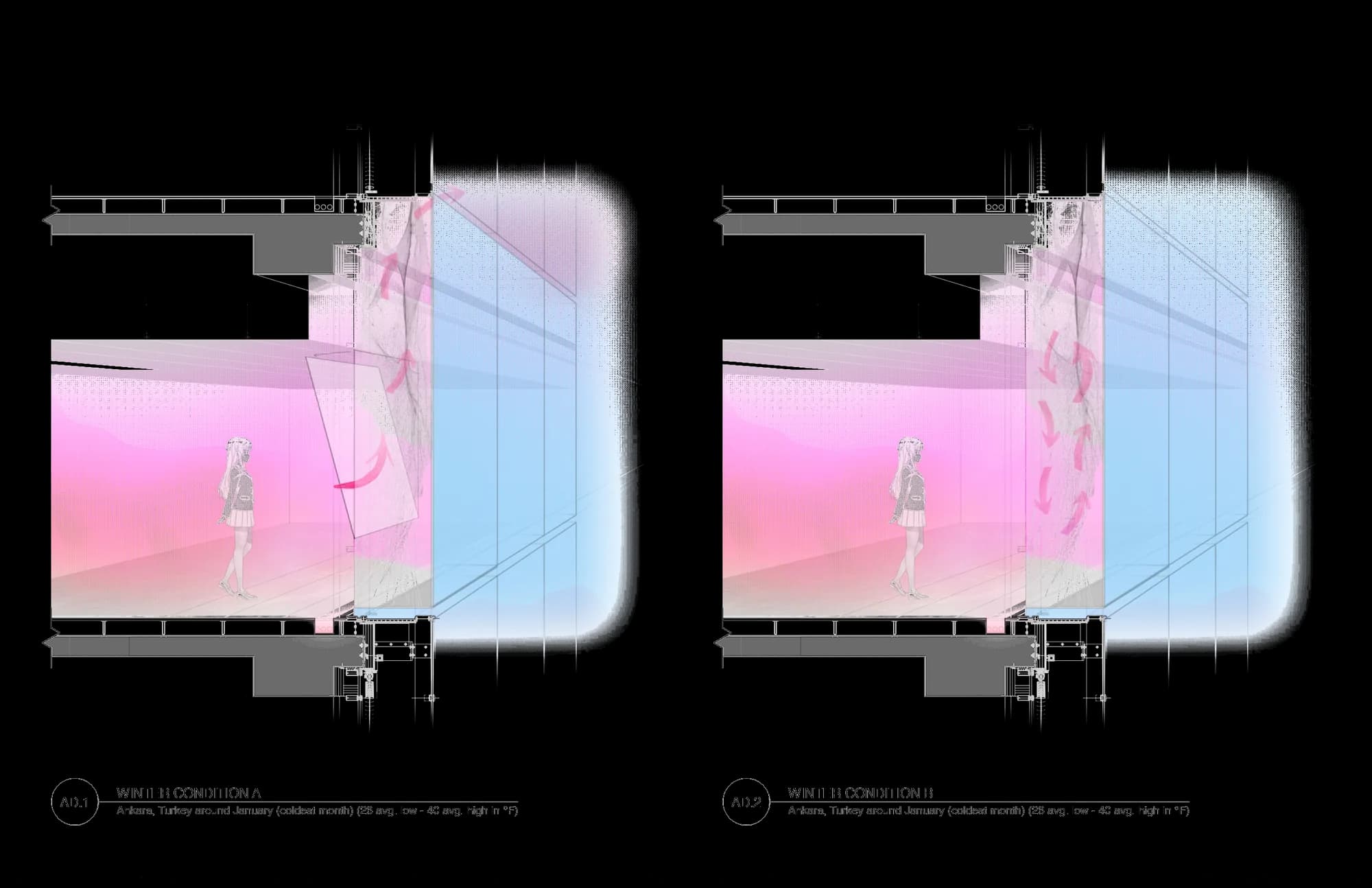
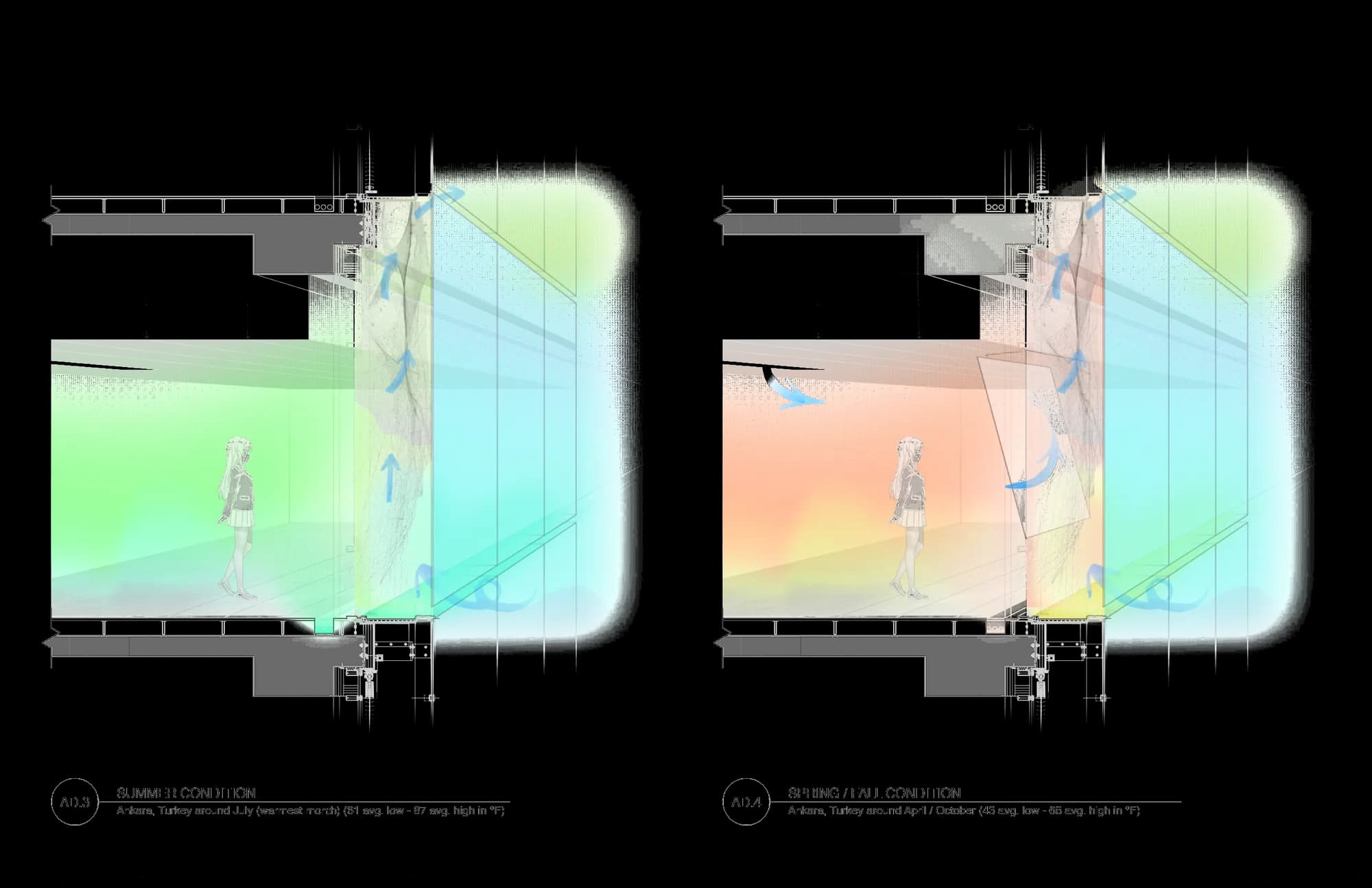
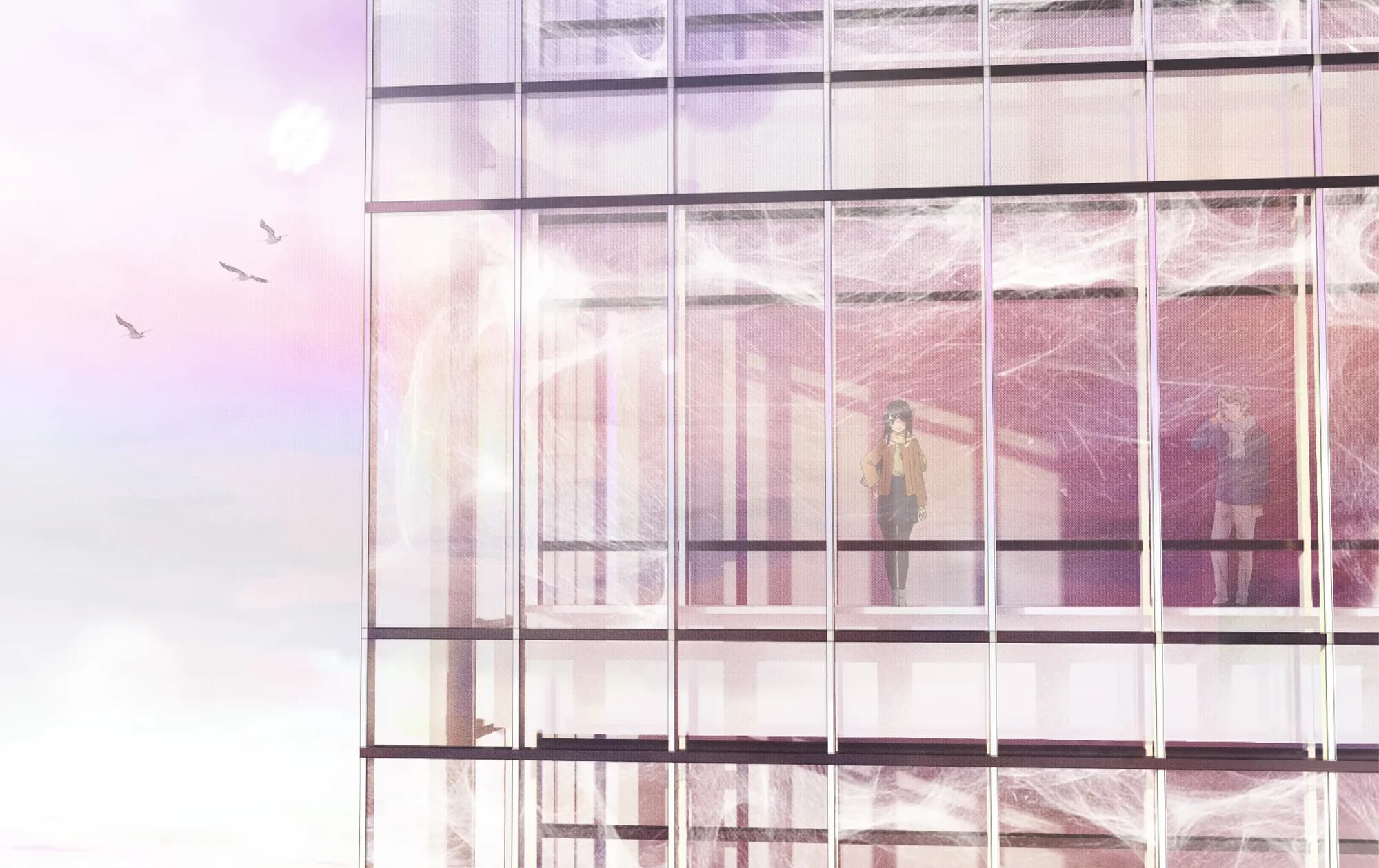
In the facade proposal the webs sit inside a prefabricated box-window double skin in Ankara. Panel type A houses spiders behind an operable window; type B stays conventional, so the living panels can be distributed against the daylight and glare gradient rather than applied uniformly. The airflow diagrams work the cavity across winter, summer, and the shoulder seasons.
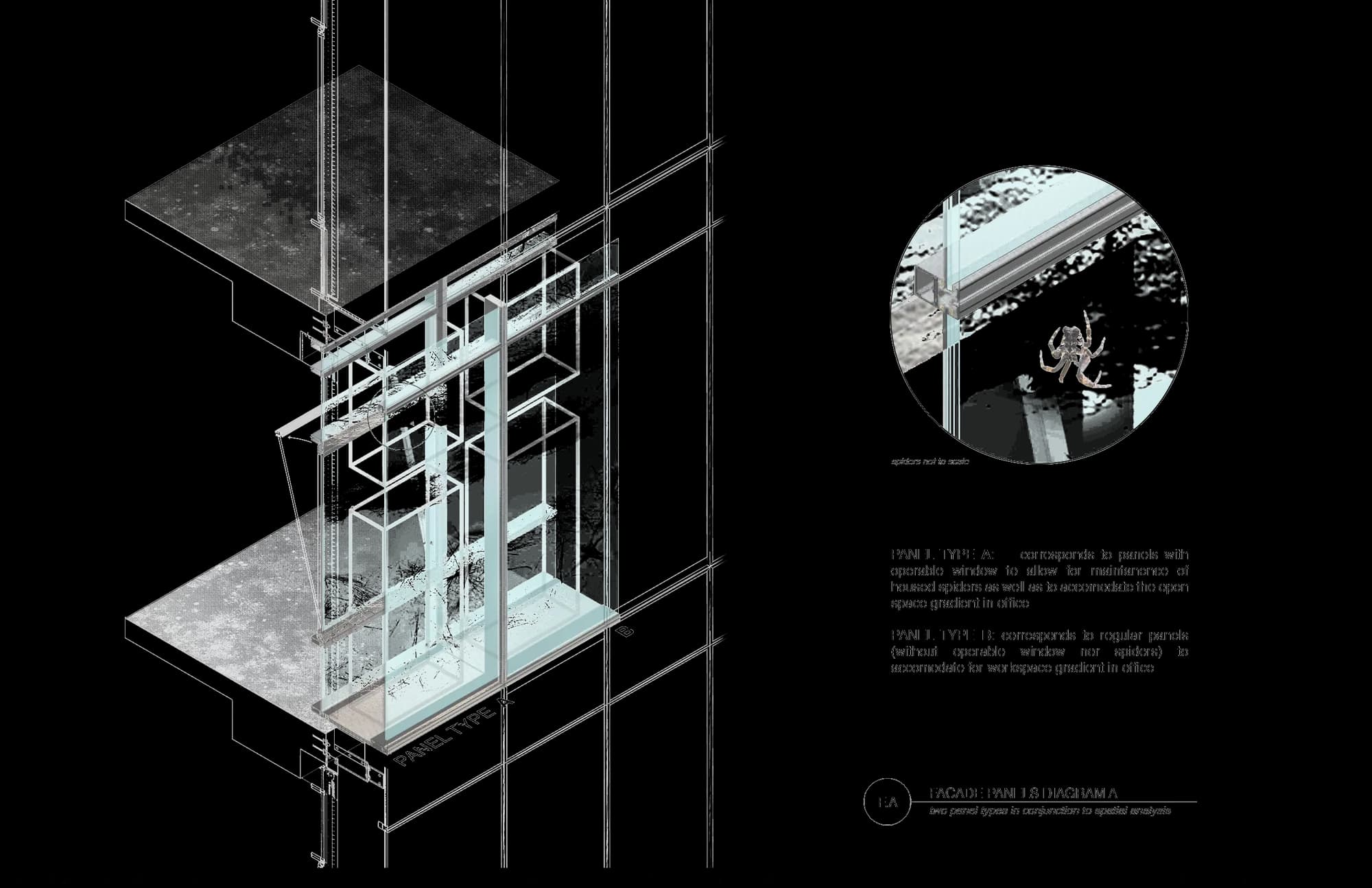
What it revealed
Two things carried forward. A living material has an agenda, so the design work is in shaping the conditions it responds to rather than specifying an outcome. And the same move as the thesis: an interior process becomes an exterior surface, legible from the street, with the actual occupant of the box never on display.